
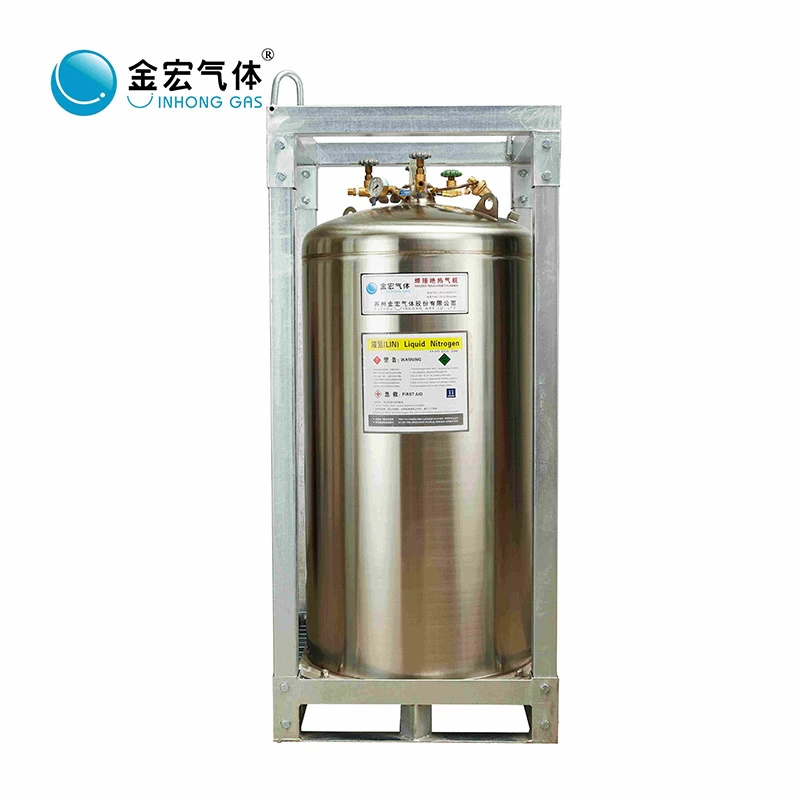
Stickstoff

Stickstoff

Nitrogen is used in large quantities in the chemical industry for blanketing, purging and pressure transfer of flammable chemicals.

High purity nitrogen is used in large quantities by the semiconductor industry as a purge or carrier gas as well as for blanketing equipment such as furnaces when not in production.

Nitrogen is a colorless, odorless, tasteless and non-toxic inert gas. Liquid nitrogen is colorless. The relative density of gas at 21.1℃ and 101.3kPa is 0.967. Nitrogen is not flammable. It can combine with some particularly active metals such as lithium and magnesium to form nitrides, and can also combine with hydrogen, oxygen and other elements at high temperatures. Nitrogen is a simple asphyxiant.

Nitrogen (3N)

Nitrogen is used in large quantities in the chemical industry for blanketing, purging and pressure transfer of flammable chemicals.

High purity nitrogen is used in large quantities by the semiconductor industry as a purge or carrier gas as well as for blanketing equipment such as furnaces when not in production.

Nitrogen is a colorless, odorless, tasteless and non-toxic inert gas. Liquid nitrogen is colorless. The relative density of gas at 21.1℃ and 101.3kPa is 0.967. Nitrogen is not flammable. It can combine with some particularly active metals such as lithium and magnesium to form nitrides, and can also combine with hydrogen, oxygen and other elements at high temperatures. Nitrogen is a simple asphyxiant.

Stickstoff (5N)

Nitrogen is used in large quantities in the chemical industry for blanketing, purging and pressure transfer of flammable chemicals.

High purity nitrogen is used in large quantities by the semiconductor industry as a purge or carrier gas as well as for blanketing equipment such as furnaces when not in production.

Nitrogen is a colorless, odorless, tasteless and non-toxic inert gas. Liquid nitrogen is colorless. The relative density of gas at 21.1℃ and 101.3kPa is 0.967. Nitrogen is not flammable. It can combine with some particularly active metals such as lithium and magnesium to form nitrides, and can also combine with hydrogen, oxygen and other elements at high temperatures. Nitrogen is a simple asphyxiant.

Diese Website verwendet Cookies, um Ihr Surferlebnis zu verbessern. Wenn Sie diese Website weiter nutzen, stimmen Sie unserer Verwendung von Cookies zu.

Sprechen Sie mit unseren Gasexperten....

Bitte aktivieren Sie JavaScript in Ihrem Browser, um dieses Formular auszufüllen.
Bitte geben Sie Ihre Arbeits-E-Mail ein