
Nitrogen is one of the most fundamental gases used in laboratories. It is commonly applied as a carrier gas for LC-MS systems, as a supply gas for nitrogen evaporators, or as a protective and inert atmosphere. Traditionally, liquid nitrogen tanks have been widely used for laboratory gas storage. However, this method also presents several limitations.
Liquid nitrogen tanks require frequent refilling, resulting in high maintenance and operational costs. In addition, transportation expenses are significant, and long-term use involves certain safety risks, including potential leakage or pressure-related incidents. As a result, liquid nitrogen storage is generally more suitable for laboratories with relatively low gas consumption. This raises an important question: is there a more comprehensive solution that allows nitrogen to be produced directly on-site for laboratory equipment or environmental applications?
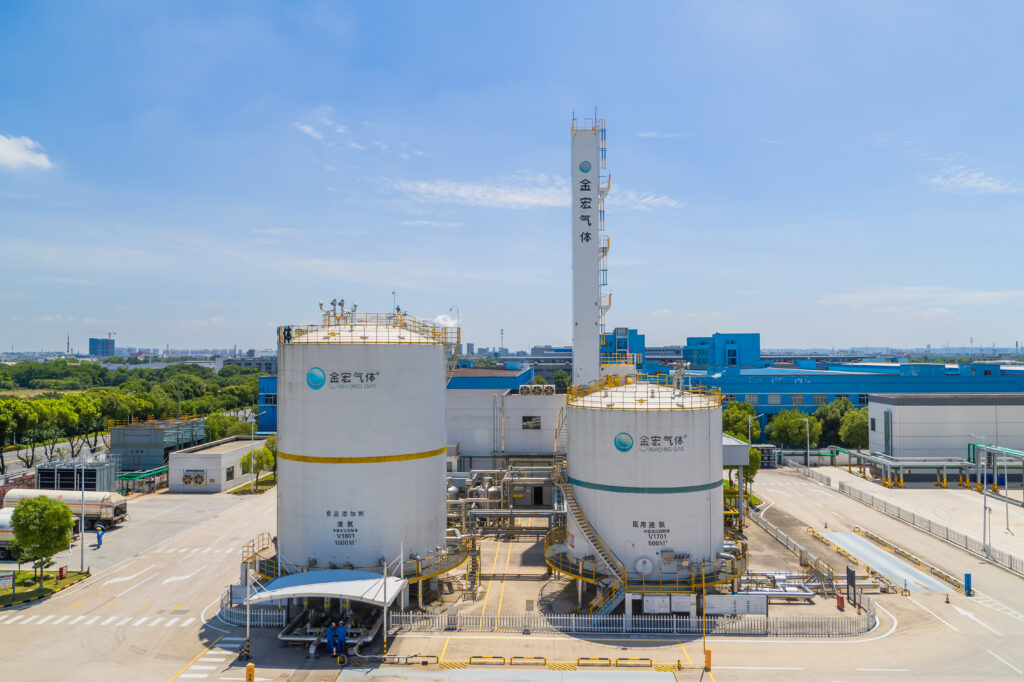
On-Site Nitrogen Generation for Laboratories
Nitrogen generators are one of the notable outcomes of recent technological advancements. Compared with liquid nitrogen tanks, nitrogen generators offer higher efficiency and improved environmental performance. They allow precise adjustment of nitrogen purity and flow rate according to actual demand, making them suitable not only for laboratories with small-scale consumption but also for large-scale industrial manufacturing applications.
Unlike traditional liquid nitrogen tanks, which involve safety concerns and require regular refilling, nitrogen generators do not require liquid nitrogen input and involve minimal maintenance. This significantly reduces operating costs. Overall, nitrogen generators represent a more convenient, safe, efficient, and environmentally friendly solution for nitrogen supply and are expected to become a mainstream option in gas generation systems.
Due to the inconvenience associated with cylinder handling and replacement, many laboratories are now choosing nitrogen generators to produce nitrogen directly on-site.
Comparison: On-Site Nitrogen Generation vs. Cylinder / Liquid Nitrogen Supply
| Comparison Item | On-Site Nitrogen Generation (PSA Nitrogen Generator) | Cylinder / Liquid Nitrogen Supply |
|---|---|---|
| Nitrogen Source | Produced directly from compressed air on-site | Supplied via high-pressure cylinders or liquid nitrogen tanks |
| Supply Method | Continuous, on-demand production | Periodic replacement and refilling required |
| Nitrogen Purity | Adjustable, up to 99.999% (PSA technology) | Fixed purity depending on supplier |
| Operating Cost | Lower long-term cost, no refilling or frequent transport | Higher long-term cost due to refills, logistics, and rental |
| Maintenance | Minimal maintenance, no cryogenic handling | Regular refilling, inspection, and handling required |
| Safety | High safety level, controlled and monitored system | Potential risks from high pressure or cryogenic storage |
| Space Requirement | Compact system, flexible installation | Requires dedicated storage space for cylinders or tanks |
| Environmental Impact | Energy-efficient, no transport emissions | Repeated transportation increases carbon footprint |
| Application Scale | Suitable for laboratories and industrial-scale use | More suitable for small or intermittent gas consumption |
| Supply Stability | Stable and uninterrupted gas supply | Supply interruptions possible during replacement |
Nitrogen Generation Without Cryogenic Processes
On-site nitrogen generation does not require cryogenic processes. Nitrogen generators are designed to provide high-purity nitrogen for laboratory and industrial applications. Currently, the two most common nitrogen generation technologies are Pressure Swing Adsorption (PSA) and membrane separation technology.
PSA technology separates nitrogen from oxygen through selective adsorption and desorption using adsorbent materials. It is known for high output purity and simple operation. Membrane separation technology relies on semi-permeable membranes to separate nitrogen and oxygen, offering a compact structure and easy maintenance.
Introduction to PSA Technology
PSA nitrogen generation and membrane-based nitrogen generation are two distinct technologies. The basic principle of PSA technology is based on the selective adsorption characteristics of carbon molecular sieves under varying pressure conditions. These sieves exhibit different adsorption capacities for oxygen and nitrogen at different pressures.
During the process, compressed air is introduced into the adsorption tower. Ossigeno and other components are selectively adsorbed by the carbon molecular sieve under pressure. When the pressure is reduced, the adsorbed components are released, allowing nitrogen to be separated and collected. Meanwhile, the carbon molecular sieve is regenerated.
Typically, two or more adsorption towers are used in an alternating cycle. By continuously switching the pressure among these towers, uninterrupted air separation is achieved. Since the adsorption and desorption processes are driven by pressure changes, the process is referred to as Pressure Swing Adsorption.
Working Principle and Advantages of PSA Nitrogen Generation
Pressure Swing Adsorption (PSA) is an innovative technology used to produce nitrogen or oxygen for industrial applications. It enables efficient and continuous gas supply while allowing precise control over gas purity. Below is an overview of how PSA works and its key advantages.
How PSA Works
Air Compressor
The process begins with an air compressor that delivers compressed air into the PSA nitrogen generator. This compressed air typically contains approximately 78% nitrogen and 21% oxygen.
Adsorption
Inside the adsorption towers, carbon molecular sieve (CMS) selectively attracts and captures oxygen molecules as well as moisture. As a result, nitrogen passes through and exits as the product gas.
Dual-Tower Configuration
The adsorbent material is distributed between two towers. While one tower is in adsorption mode, the other undergoes regeneration. This alternating operation allows continuous nitrogen production without interruption.
Advantages of PSA Technology
PSA gas generation offers several benefits, making it a widely adopted solution in industrial and laboratory environments:
Continuous Fornitura di gas
The dual-tower configuration ensures uninterrupted nitrogen production, providing a stable and reliable supply.
Adjustable Nitrogen Purity
PSA systems allow precise control of nitrogen purity to meet specific application requirements. In certain cases, very high purity can be achieved at lower flow rates, which is essential for sensitive applications.
Optimized Energy Consumption
At higher flow rates, slightly lower purity levels are often sufficient for most applications, allowing energy consumption to be optimized and operating costs reduced.
Safety and Reliability
PSA systems are designed for safe and reliable operation. The entire process is monitored and controlled, minimizing the risk of malfunctions or accidents.
Overall, PSA technology is a highly efficient and dependable method for nitrogen generation. It delivers nitrogen at specified purity levels while offering energy-saving and cost-optimization benefits, making it a preferred solution across a wide range of industries.
Introduction to Membrane Separation Technology
Membrane separation technology utilizes organic polymer or inorganic materials with selective permeability to form membranes with specific structural properties. Under a driving force such as pressure, different gas components permeate the membrane at different rates. This difference in permeability enables gas separation or enrichment of specific components.
How to Choose the Right Nitrogen Generator
When selecting a nitrogen generator, several key factors should be taken into consideration:
First, determine the required nitrogen purity to select the appropriate technology and equipment. PSA systems can typically provide nitrogen purity of up to 99.999%, while membrane separation systems generally deliver purity levels around 99%.
Second, consider the equipment size and nitrogen output capacity to ensure compatibility with available space and application requirements.
Third, evaluate system stability and maintenance requirements to reduce long-term operating costs and extend service life.
Finally, assess overall cost-effectiveness, favoring equipment that offers high performance at a reasonable investment. By comprehensively evaluating these factors, users can select the most suitable nitrogen generator for their specific needs.
About Jinhong Gas
As a professional industrial gas supplier, Jinhong Gas provides reliable nitrogen solutions for laboratories and industrial users worldwide. With extensive experience in industrial gases and on-site gas supply systems, Jinhong Gas offers high-quality nitrogen products, customized supply solutions, and technical support tailored to different application scenarios. Whether for laboratory analysis, electronics manufacturing, chemical processing, or general industrial use, Jinhong Gas is committed to delivering stable gas quality, efficient service, and long-term value to its customers.
 English
 Indonesian
 Korean
 Japanese
 Malay
Malay German
 Spanish
 French
 Portuguese
 Arabic
 Italian
 Polish
 Dutch
Dutch Vietnamese
 Russian