
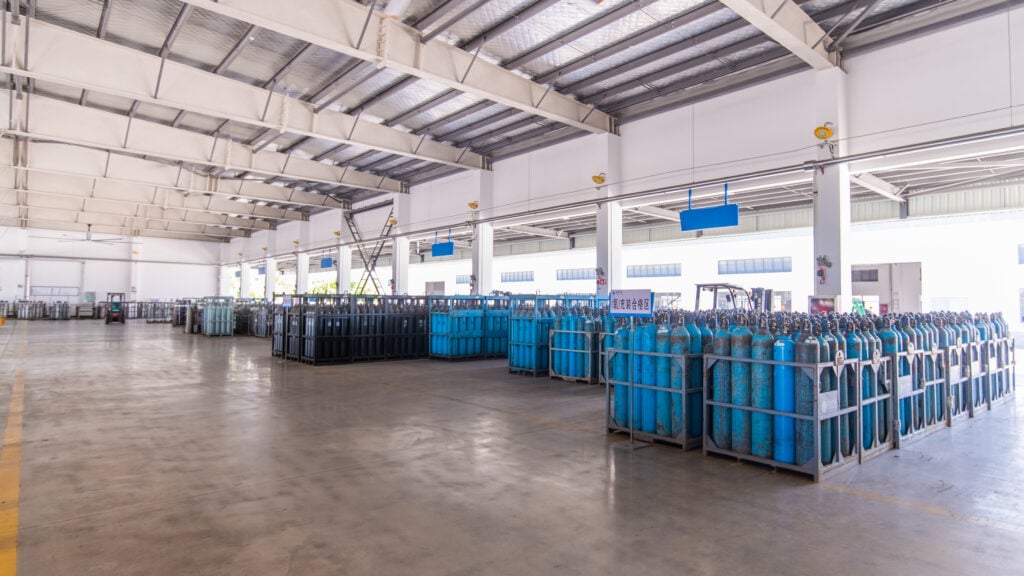
Gas cylinders are widely used as containers for compressed gases in industrial manufacturing, medical services, laboratories, and many other applications. Different gases require different cylinder specifications. Understanding these differences is essential for safe and efficient operation. Below is an overview of common gas cylinder types and their key characteristics.
Overview Table of Common Gas Cylinder Specifications and Safety Notes
| Gas Type | Typical Cylinder Volume | Working Pressure | Cylinder Color / Identification | Key Safety Notes |
|---|---|---|---|---|
| Oxygen (O₂) | 40 L (medical); 8 L / 10 L / 15 L (industrial) | ~15 MPa | Blue | Use right-hand thread valves; keep away from oil and grease; ensure regulator matches pressure range |
| Acetylene (C₂H₂) | 40 L | ≤ 1.5 MPa | Brown | Must be stored upright; do not transport horizontally; filling amount ≤ 6.5 kg; temperature ≤ 40°C |
| Carbon Dioxide (CO₂) | 25 L | ~6 MPa | Aluminum (often with siphon tube) | Filling ratio 0.6 kg/L; fire extinguisher cylinders require annual hydrostatic testing |
| Nitrogen (N₂) | 40 L; 10 L (laboratory use) | ~15 MPa | Black | High-purity cylinders must be well sealed; purge cylinder at least three times before first use |
| Argon (Ar) | 20 L / 40 L | ~15 MPa (gas) | Gray | Non-toxic but may cause asphyxiation in high concentrations; ensure good ventilation |
| Hydrogen (H₂) | 40 L | 13–15 MPa | Dark green with red markings | Highly permeable gas; use special sealing materials; storage area must be ventilated and ignition-free |
| Propane (C₃H₈) | 15 kg (household); 50 kg / 5 kg (commercial) | ≤ 2 MPa | Typically steel gray | Equipped with fusible safety valve; inspect rubber seals before use |
| Chlorine (Cl₂) | Varies | As specified | Steel with brass valve | Requires corrosion-resistant valves; regular wall thickness inspections |
| Nitrous Oxide (N₂O) | Medical cylinders | As specified | Medical-standard marking | Must not contact lubricants; use dedicated flow meters |
| SF₆ and Fluorinated Gases | Varies | Negative pressure storage | As specified | Must be stored under negative pressure conditions |
Common Gas Cylinder Specifications
Oxygen Cylinders
Medical oxygen cylinders typically have a nominal volume of 40 liters, with a working pressure of 15 MPa (approximately 150 bar). A fully filled cylinder weighs around 60 kg and is usually painted blue.
Industrial oxygen cylinders are available in larger and more varied sizes, commonly 8 L, 10 L, and 15 L. When using industrial oxygen, it is important to ensure that the pressure regulator is compatible with the cylinder’s pressure range. Oxygen cylinder valves use right-hand threads to prevent accidental connection with fuel gas cylinders.
Acetylene Cylinders
Acetylene cylinders are generally brown and are filled internally with porous material and acetone as a solvent. The standard cylinder volume is 40 liters, with the working pressure strictly limited to below 1.5 MPa.
Dissolved acetylene cylinders must not be transported horizontally, and the filling amount must not exceed 6.5 kg. Warning steel rings are usually marked on the cylinder shoulder to indicate safety precautions.
Khí carbon dioxide Cylinders
Carbon dioxide cylinders are commonly made of aluminum alloy and are often equipped with a siphon tube for liquid CO₂ discharge. A typical 25-liter CO₂ cylinder has a working pressure of approximately 6 MPa, with a filling ratio controlled at 0.6 kg per liter.
CO₂ cylinders used for fire extinguishers must undergo annual hydrostatic testing, and their valve connections are designed with special fire-resistant features.
Nitơ Cylinders
Nitrogen cylinders are usually painted black. A standard 40-liter nitrogen cylinder can reach a full pressure of 15 MPa. Smaller cylinders, such as 10-liter units, are commonly used in laboratories and often feature brass valves to reduce oxidation.
High-purity nitrogen cylinders must maintain excellent valve sealing. Before first use, the cylinder should be purged with nitrogen at least three times to remove residual air.
Argon Cylinders
Argon cylinders used for welding are typically gray and are available in 20-liter and 40-liter capacities. When stored as gas, the pressure is similar to that of nitrogen cylinders. Liquid argon cylinders require double-layer vacuum-insulated structures.
Although argon is non-toxic, high concentrations can displace oxygen and create an asphyxiation risk, so adequate ventilation is essential.
Hydro Cylinders
Hydrogen cylinders are usually dark green with red lettering, with nominal working pressures ranging from 13 to 15 MPa. Due to hydrogen’s small molecular size and high permeability, valve sealing gaskets must be made from special materials.
A fully charged 40-liter hydrogen cylinder contains approximately 0.8 kg of hydrogen. Storage areas must be well ventilated and kept away from ignition sources.
Propane Cylinders
Household propane cylinders are typically 15 kg, with working pressures not exceeding 2 MPa. Commercial options include 50 kg steel cylinders and portable 5 kg cylinders with integrated valves.
A fusible safety valve is installed at the cylinder base, which automatically cuts off the gas supply when the temperature exceeds 100°C. Before use, rubber sealing rings must be inspected for aging or damage.
Special Gas Safety Considerations
Chlorine cylinders use brass valves for corrosion resistance, and regular inspections of wall thickness are required.
Medical nitrous oxide (N₂O) cylinders are equipped with dedicated flow meters and must never come into contact with lubricants or oils.
For fluorinated gases such as sulfur hexafluoride (SF₆), cylinders must be stored under negative pressure conditions.
Inspection intervals depend on cylinder type:
- Steel cylinders: inspection every 3 years
- Composite or wrapped cylinders: inspection every 5 years
Inspection items include wall thickness measurement, valve leak testing, and surface crack inspection. Before filling, residual pressure must not be lower than 0.05 MPa to prevent contamination or backflow.
During transportation, cylinders must be properly secured to avoid impact. Outdoor storage in summer requires shading, and ambient temperature must not exceed 50°C. Empty and full cylinders should be stored separately, with a minimum distance of 5 meters between oxygen cylinders and fuel gas cylinders. Cylinders showing bulging or corrosion over one-third of the surface area must be removed from service immediately.
Pressure Regulator and Operating Safety
Selecting the correct pressure regulator is critical. The inlet thread must match the cylinder valve specification.
Oxygen valves must never contact oils or grease, while acetylene regulators must be equipped with flashback arrestors.
When operating, open the cylinder valve first and then adjust the regulator. When shutting down, reverse the sequence. If the pressure gauge needle fluctuates violently, stop operation immediately.
Gas Cylinders as Pressure Vessels
Gas cylinders are mobile pressure vessels used for transporting and storing industrial gases and are designed for repeated refilling. Ensuring cylinder safety is a critical part of enterprise safety management. This includes cylinder procurement, acceptance inspection, transportation and handling, use, storage, and periodic inspection. Understanding safety requirements at each stage is essential for safe operations.
Cylinder Color Identification
(Refer to standard cylinder color codes and markings for gas identification.)
Summary of Key Points for Gas Cylinder Use
- Oxygen and acetylene cylinders must be kept away from heat sources, electrical equipment, oils, and flammable materials.
- Acetylene cylinders must be secured upright to prevent tipping. Horizontal use is strictly prohibited. If a cylinder has been laid down, it must stand upright for at least 15 minutes before use.
- During use, transportation, and storage, acetylene cylinders must not be exposed to temperatures above 40°C.
- Acetylene cylinders must be stored upright with anti-tipping measures and must not be placed on insulating materials such as rubber.
- The distance between gas cylinders and open flames must be at least 10 meters. The distance between oxygen and acetylene cylinders must be greater than 5 meters.
- Oxygen and acetylene cylinders must be placed in fixed, clearly marked positions, with 50 mm yellow boundary lines.
Gas Cylinder Acceptance Inspection
Cylinders must not be accepted if any of the following conditions are present:
- Severe corrosion or significant mechanical damage
- Missing valve protection caps or shock-absorbing rings
- Lack of a valid certificate, which should include the cylinder number, gas production date, validity period, and filling pressure
Laboratory Gas Cylinder Safety Principles
- Cylinders must be clearly labeled with gas composition and relevant information.
- Storage areas must be ventilated, thermally insulated, and secure—especially for toxic, flammable, or explosive gases.
- Cylinders must be stored by gas category and never mixed, particularly flammable gases with oxidizing gases such as oxygen.
- Cylinders must not be struck or impacted. Regular checks for leaks and pressure gauge readings are required.
- Cylinders must not be completely emptied. A residual pressure of at least 0.05 MPa must be maintained. For flammable gases such as acetylene (C₂H₂), residual pressure should be 0.2–0.3 MPa.
- Large quantities of cylinders must not be stored in laboratories.
- Cylinders must always be properly secured.
Gas Cylinder Safety Management Requirements
- At sites using acetylene cylinders, the total stored acetylene volume must not exceed 30 m³ (equivalent to five 40-liter cylinders).
- If stored acetylene volume exceeds 30 m³, a separate storage room made of non-combustible materials must be provided, with at least one fixed wall.
- If stored acetylene volume exceeds 240 m³ (equivalent to 40 cylinders), a dedicated warehouse with a fire-resistance rating of no less than Class II must be constructed, maintaining a minimum fire separation distance of 10 meters from other buildings, or separated by a fire wall.
These requirements are consistent with the provisions of Chapter 3 of the Building Fire Protection Design Code.
Về Jinhong Gas
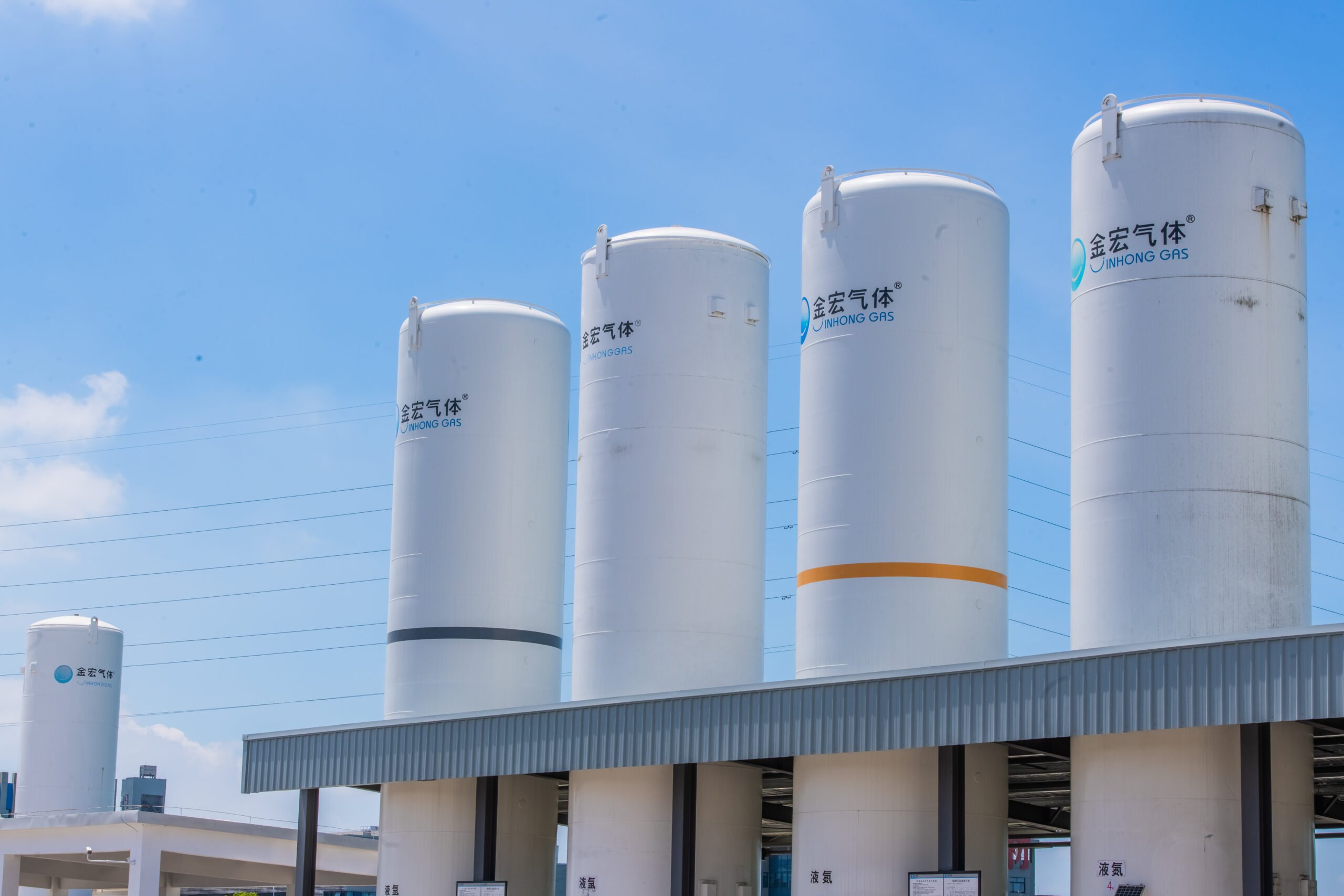
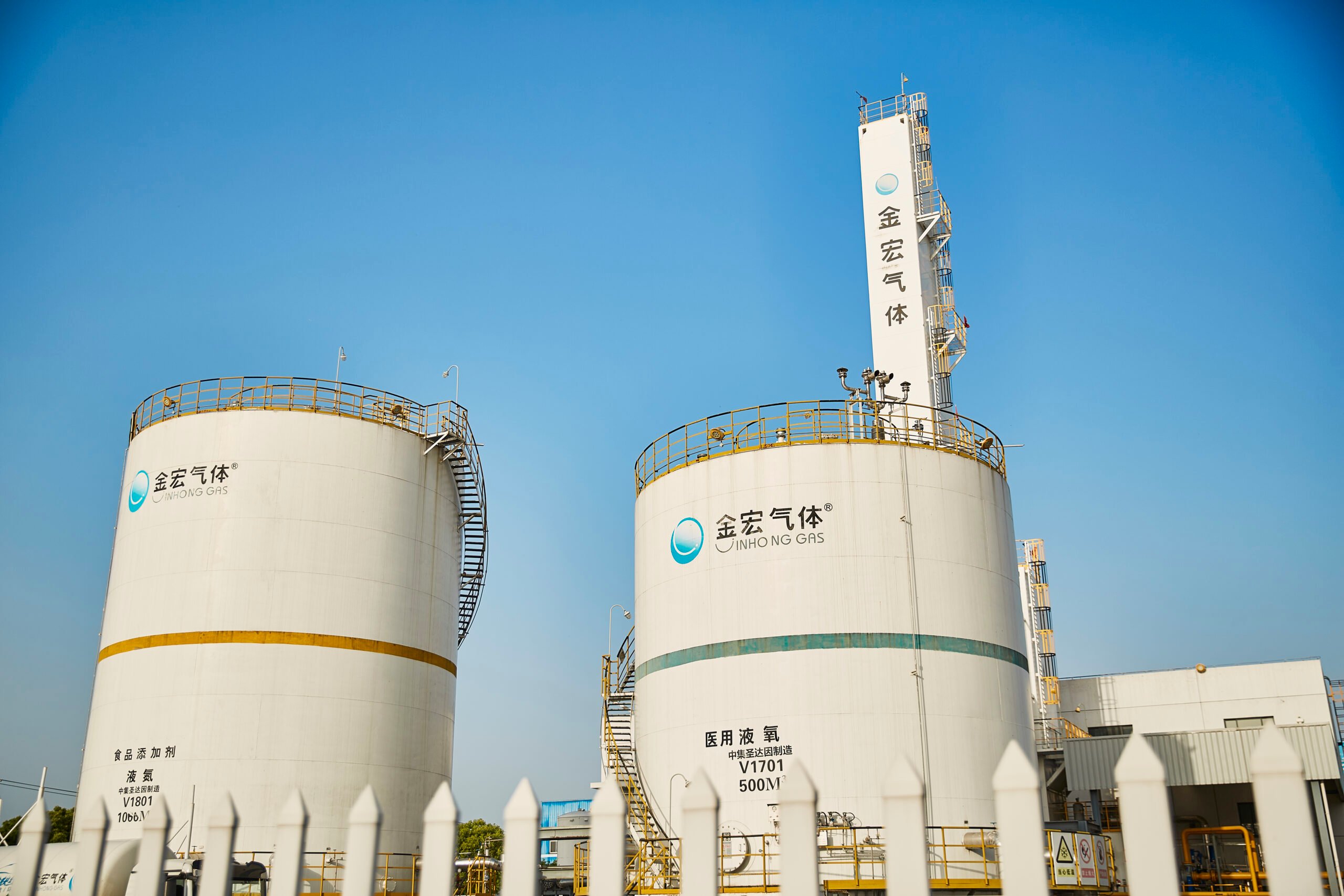
Khí Jinhong is a professional industrial gas supplier with extensive experience in the production, filling, and distribution of industrial and specialty gases. We provide a wide range of gases, including oxygen, nitrogen, argon, carbon dioxide, hydrogen, acetylene, and specialty gas solutions for manufacturing, laboratories, medical institutions, and high-end industrial applications.
At Jinhong Gas, we place strong emphasis on gas quality, cylinder safety, and regulatory compliance. Our operations strictly follow national and international safety standards, ensuring reliable supply, stable purity, and comprehensive technical support for our customers. By combining advanced gas production technology with rigorous safety management, Jinhong Gas is committed to delivering safe, efficient, and sustainable gas solutions worldwide.
 English
 Indonesian
 Korean
 Japanese
 Malay
Malay German
 Spanish
 French
 Portuguese
 Arabic
 Italian
 Polish
 Dutch
Dutch Vietnamese
 Russian