
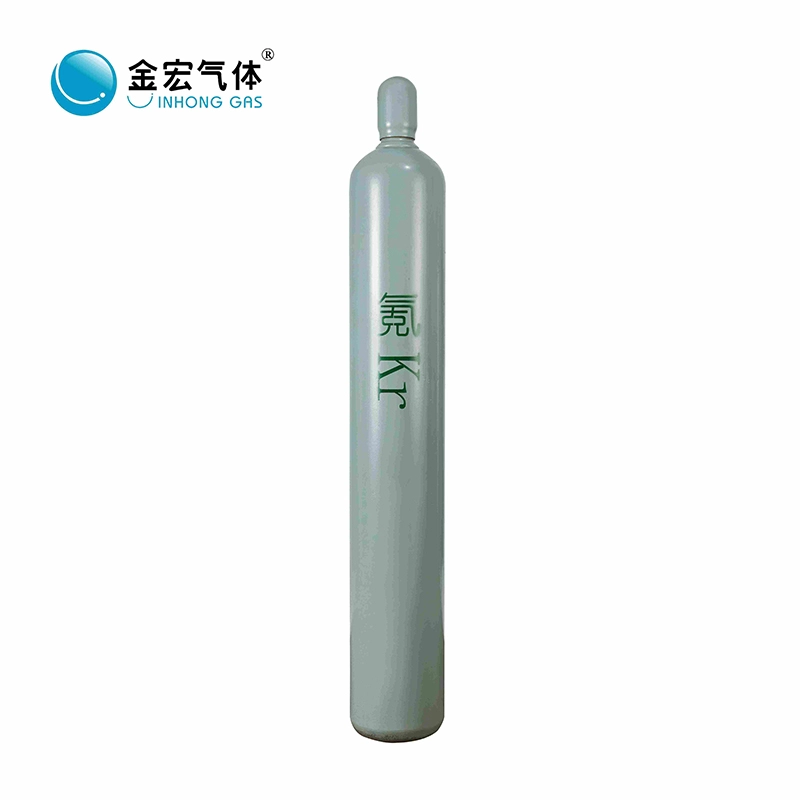
What is Krypton?
Krypton (Kr) is a noble gas with an atomic number of 36. It is colorless, odorless, and chemically inert, making it highly stable under standard conditions. Krypton is widely used in various industries due to its unique properties, including lighting, energy-efficient windows, and medical diagnostics. This article will explore the applications of krypton in these industries and its growing significance in newer technologies.
Krypton’s Atomic Number and Characteristics
Krypton is part of the noble gases group (Group 18 of the periodic table) and has the atomic number 36. As a noble gas, krypton has a full outer electron shell, making it very stable and non-reactive in most conditions. While krypton is chemically inert, it can form compounds such as krypton difluoride (KrF2) and krypton tetrafluoride (KrF4) under specific conditions, though these compounds are not widely used in commercial applications.
Krypton’s unique properties, such as its high density and low reactivity, make it ideal for various applications where stability and non-reactivity are essential.
Use #1: Stronger Light
Krypton is best known for its contribution to lighting applications. When ionized, krypton produces a bright white light, which can be adjusted to emit a greenish-yellow or bluish hue depending on the gas mixture. Krypton is used in:
| Application | Description |
|---|---|
| Flashbulbs | Krypton is used in photographic flashbulbs to provide bright, short bursts of light. |
| Fluorescent Lamps | Krypton is used in some fluorescent lamps to improve efficiency and light output. |
| Airport Runway Lights | Krypton’s bright, stable light is ideal for use in critical airport lighting systems. |
| Lasers & Laser Shows | Krypton gas is used in some laser systems, particularly in krypton plasma lasers for light shows. |
| Neon Signs | While neon signs are often thought to use neon gas, krypton is commonly used for similar effects in signs, creating a more varied color palette. |
The strong light produced by krypton makes it an excellent choice for high-intensity lighting in various professional and commercial settings, including signage and visual displays.
Use #2: Improved Insulation for Windows
Krypton is also used as an insulating gas in energy-efficient windows. It provides superior thermal insulation when used between window panes, especially when the gap between panes is less than 0.5 inches. Krypton is more efficient than other gases, like argon, in such applications, which results in better thermal performance.
Here’s a comparison of the insulating properties of krypton and argon:
| Gas | Thermal Conductivity | Typical Use | Cost |
|---|---|---|---|
| Krypton | Lower thermal conductivity | Used in windows with narrower gaps, especially in commercial or high-performance residential windows | More expensive than argon due to extraction difficulty |
| Argon | Higher thermal conductivity | Commonly used in standard window insulation | Less expensive than krypton |
Although krypton is more expensive to extract than argon, it provides significant energy savings over the long term. According to studies, homes with krypton-filled windows can save up to 15% on their heating and cooling bills annually, making it a worthwhile investment for homeowners and businesses alike.
Use #3: Medical Diagnostics
In the medical field, krypton is primarily used in nuclear medicine and diagnostic imaging. The isotopes of krypton, such as krypton-85 and krypton-83, are utilized in a range of diagnostic procedures:
| Isotope | Application |
|---|---|
| Krypton-85 | Used in blood flow studies and to diagnose lung function issues. |
| Krypton-83 | Used in MRI scans to enhance imaging of lung tissue and blood flow. |
Krypton’s inert nature ensures that it does not interfere with the biological processes being studied, making it an excellent choice for medical imaging and nuclear medicine. This allows doctors to diagnose pulmonary disorders and other respiratory conditions accurately.
Use #4: Other Applications and Market Changes
Krypton has a broad range of other applications beyond lighting, insulation, and medicine. Some of these include:
| Application | Description |
|---|---|
| Electromagnetic Calorimeters | Krypton is used to measure the amount of heat in electromagnetic calorimeters. |
| Nuclear Fusion Research | Krypton’s isotopes are used to study plasma behavior in fusion research. |
| Detection of Nuclear Fuel Reprocessing | Krypton is used to detect nuclear fuel reprocessing by measuring the amount of krypton released. |
| Satellite Propellants | Krypton is used as a propellant in satellite systems due to its high density and low reactivity. |
| Semiconductors | Krypton is increasingly used in the etching process for semiconductor production, particularly in 3D NAND fabrication. |
One of the most significant recent developments is krypton’s role in the semiconductor industry, where it has become an alternative to xenon (Xe) for 3D NAND chip manufacturing. As the demand for high-capacity storage devices grows, krypton’s role in advanced chip production has expanded, leading to new, unforecasted demand in the market.
Gold and Silver Suppliers of Krypton: Jin Hong Gas
Jin Hong Gas, a leading supplier of krypton and other noble gases, provides krypton at up to 99.999% purity. We offer krypton in various mixtures with argon and xenon, meeting the diverse needs of industries worldwide. Whether you need krypton for lighting applications, energy-efficient windows, or medical diagnostics, Jin Hong Gas ensures you receive high-quality gases with reliable and timely delivery.
Conclusion
Krypton’s unique properties, such as its high density, low reactivity, and bright light production, make it indispensable in several industries, including lighting, building insulation, medical diagnostics, and advanced semiconductor production. As the demand for more energy-efficient solutions and innovative technologies increases, krypton’s role in modern industries will continue to grow.
By understanding the diverse applications and benefits of krypton, industries can better harness its potential in improving energy efficiency, enhancing technology, and providing more accurate medical diagnostics.
Additional Considerations for Users
For those looking to expand their knowledge of krypton, we recommend exploring:
- Environmental Impact of Krypton: How krypton extraction and use affect the environment and what sustainable practices can be implemented.
- The Future of Krypton in Emerging Technologies: Exploring potential new uses of krypton in fields like nanotechnology and quantum computing.
- Safety Considerations: Proper handling and safety protocols when using krypton gas in industrial or laboratory settings.
source:krypton what is it used for
source:Krypton Atomic Number
 English
 Indonesian
 Korean
 Japanese
 Malay
Malay German
 Spanish
 French
 Portuguese
 Arabic
 Italian
 Polish
 Dutch
Dutch Vietnamese
 Russian